


Defamation in the Northern Territory is governed by both the Defamation Act 2006 (NT) and the common law. In this article, we provide a straightforward overview of defamation law as it applies in the Northern Territory, including how actions are commenced, time limits, and court processes for defamatory claims.
Do you reside in the Darwin, or elsewhere in the Northern Territory, and you’ve been defamed? Well, in this easy to read article, we provide a short overview of defamation law as it applies to residents in the Northern Territory.
Defamation in the Northern Territory (NT).
The law of defamation in the Northern Territory exists to balance protection of reputation with freedom of expression, and operates in a similar way to other Australian jurisdictions.
Defamation law in the NT exists in two (2) ways, both of which apply in their own way to a defamation claim. They are:
- The Defamation Act 2006 (NT); and
- The common law.
However, the Defamation Act 2006 (NT) was substantially amended in August 2025, to include the element of serious harm, amongst other things, so that the NT now aligns with most states and territories in Australia (except Wester Australia). The amendments were contained in the Defamation Legislation Amendment Act 2025 (NT).
What is defamation?
Defamation is a common law tort. In essence, it is a recognized civil action designed to provide protection to reputation and recourse (usually in the form of damages) for harm caused to a person’s reputation. It is restricted to natural persons, and certain body corporates (usually corporations).
The matters which must be proved on the balance of probabilities (unless the Briginshaw standard applies), are as follows:
- The defendant published material;
- The material identified the plaintiff;
- The material was defamatory (that is, it carried a defamatory imputation (a defamatory meaning); and
- The publication caused, or is likely to cause, serious harm to the plaintiff’s reputation.
What courts can hear a defamation claim in the NT?
When claiming defamation in the Northern Territory, the choice of court depends on the amount of damages sought and other procedural rules.
In the Northern Territory, both the Local Court and the Supreme Court can hear and determine defamation claims. This is subject to the amount of damages sought by the plaintiff. If the amount sought is close to the statutory maximum under the Defamation Act 2005 (NT), the Supreme Court of the Northern Territory will be the correct court to commence and bring proceedings in.
What is the time limit for commencing a defamation claim?
The time limit for commencing a defamation claim in the NT is one (1) year from the date the matter is published. Usually, this can be determined easily by an appropriately qualified lawyer. However, in certain circumstances, it will not be as easy to identify the publication date.
I want to sue for defamation in the NT, what do I do?
You must first give the publisher (that is, the person who said or published the defamatory material about you), a concerns notice.
A concerns notice must be in writing and comply strictly with the statutory requirements under the Defamation Act 2006 (NT). It the concerns notice is defective, it will not be considered a concerns notice, and as such, any claim for defamation brought on the basis of the defective concerns notice will be liable to be struck out.
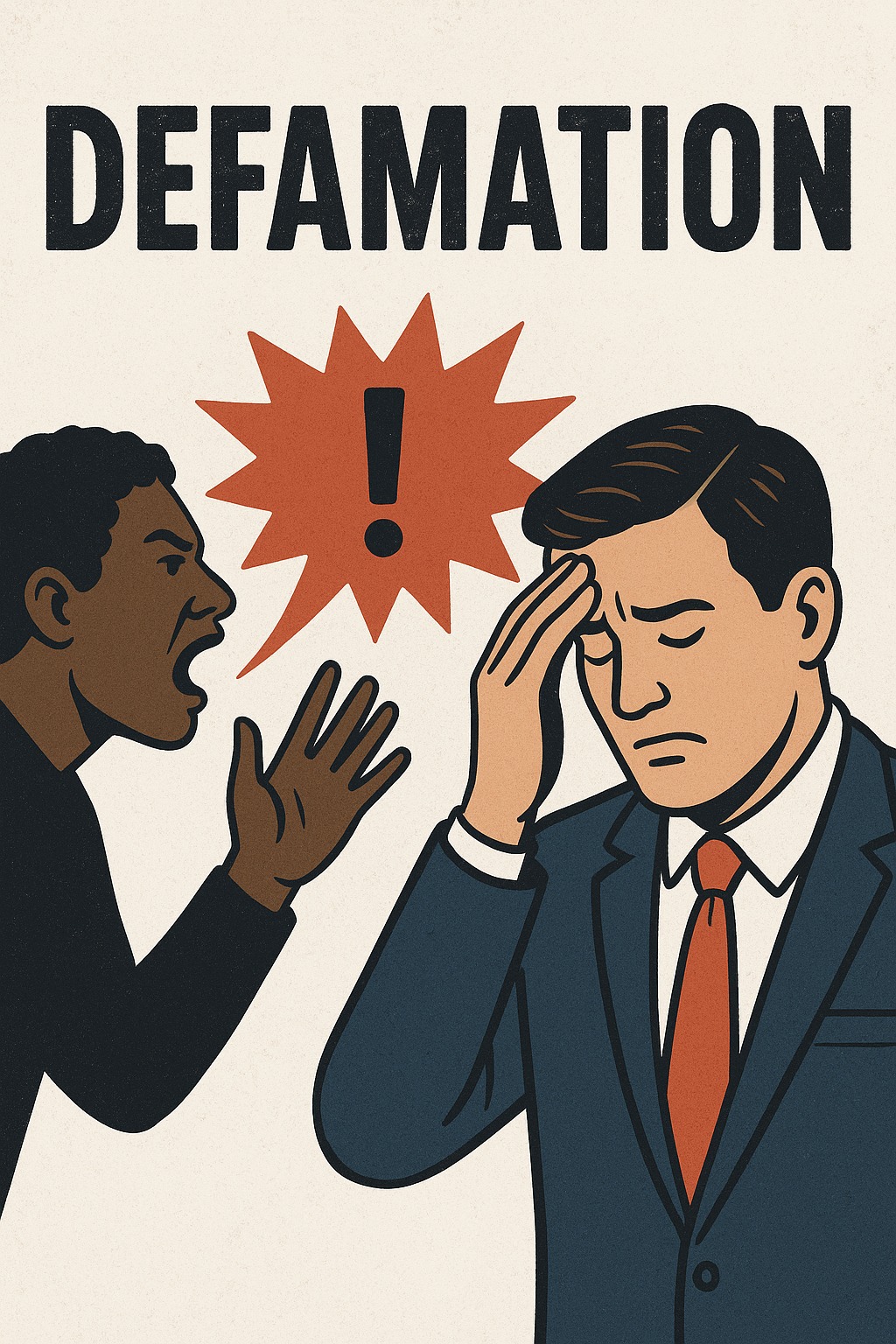
Service of the concerns notice
You must serve the concerns notice on the publisher, and thereafter, wait the applicable period, before you commence proceedings for defamation. Service of a concerns notice can be carried out in a variety of forms, but advice should be sort as to whether the service is sufficiently effective, and thus, constitutes service of the concerns notice for the purposes of the Defamation Act 2006 (NT).
What is defamation in the Northern Territory?
Defamation in the Northern Territory occurs when a false statement is published about a person or business that harms their reputation. Defamation law is governed by the Defamation Act 2006 (NT) and relevant common law principles, and aims to balance reputation protection with freedom of expression.
What must be proven to establish defamation in the Northern Territory?
To establish defamation in the Northern Territory, a claimant must generally prove that a defamatory statement was published to a third party, that the statement identified the claimant, and that the publication caused or was likely to cause serious harm to the claimant’s reputation.
What is the serious harm requirement in defamation law?
The serious harm requirement means that a defamation claim cannot proceed unless the publication has caused, or is likely to cause, serious harm to the claimant’s reputation. This threshold must be met before the court will consider the merits of the claim.
How long do I have to bring a defamation claim in the Northern Territory?
Defamation proceedings must generally be commenced within one (1) year from the date the defamatory material was published. In limited circumstances, the court may extend this period to a maximum of three (3) years if it was not reasonable to bring the claim earlier.
Which courts hear defamation cases in the Northern Territory?
Defamation matters in the Northern Territory may be heard in either the Local Court or the Supreme Court, depending on the amount of damages claimed and the complexity of the case.
What defences are available to defamation claims?
Common defences to defamation claims include justification (truth), honest opinion, absolute privilege, qualified privilege, and publication in the public interest. The availability of a defence depends on the facts of each case.
Can online posts or social media comments amount to defamation?
Yes. Online publications, including social media posts, comments, reviews, emails, and website content, can give rise to defamation claims if they meet the legal elements of defamatory publication.
What remedies are available for defamation in the Northern Territory?
Remedies may include damages, injunctions preventing further publication, corrections, apologies, or negotiated settlements. The appropriate remedy will depend on the seriousness of the harm and the circumstances of the publication.
Should I seek legal advice for defamation matters?
Yes. Defamation law is complex and highly fact-specific. Obtaining legal advice early can help assess potential claims or defences, manage risk, and resolve disputes efficiently.
Do you need a defamation lawyer in Darwin, or the Northern Territory?
At Allen Law, we have experience in advising and representing both plaintiffs and defendants in defamation matters in both Darwin and all around the Northern Territory.
For details on recent changes to defamation law affecting time limits and serious harm requirements, see the Northern Territory Government’s legal reform page on defamation law.Here
If you are based in the Northern Territory and are need of a defamation lawyer that can assist you, get in touch today to see how we can help!
Phone: (03) 7020 6563
Email: [email protected]
Website: www.allenlawyers.com.au
Disclaimer: This article is general in nature and does not constitute legal advice. Please contact Allen Law for advice tailored to your particular situation.

